2. Ready to start painting? | ||
Denne vejledning indeholder tidligere råd om påføring. Råd om grunder, belægningers kompatibilitet, fortynding, temperatur og tørretider gennemgås i forhold til formuleringen fra september 2026. Se de aktuelle produktoplysninger, og kontakt os, hvis du er i tvivl. Once you have completed your surface preparation, you're ready to start painting. Please try to contain your enthusiasm and excitement for a moment, and make sure you have everything ready for trouble-free painting. TemperatureTuffCab is best applied at room temperature. Avoid painting in an exceptionally cool environment (below 10°C), as the drying and curing time increases significantly. Below 5°C the paint will not form a surface skin and will not harden. TuffCab cures best at room temperature. Also avoid painting at high temperatures. Temperatures significantly above 25°C can result in the surface drying very quickly, making it difficult to apply a thin, even coat. At room temperature, the first coat will usually dry in around 30–60 minutes, depending on application thickness and temperature. In a cooler environment, 2–4 hours is common for the first coat. Subsequent coats will normally take a little longer, but it is best to apply additional coats more sparingly to help ensure hard layers of paint. A second heavy, textured coat may take up to 24 hours to fully dry in cool conditions. Painting in the HeatOn a hot summer's day it may be very tempting to get all your speakers out in the garden and give them a fresh coat of paint. We advise trying to pick a slightly cooler day. In summer heat around 30°C, the paint can dry in as little as 10–15 minutes, sometimes making it difficult to finish a panel with an even coat. Rapid drying increases the possibility of roller marks from the edges of the roller. With the paint drying while you are rolling it on, it is common for the texture to become a little 'spiky', making the surface feel very rough, almost like sandpaper. If this happens, let the paint dry fully and then lightly sand the surface before applying a final thin coat — preferably in the shade. Are You Prepared?First, wear appropriate clothing. If you get TuffCab on your clothes while it is still wet, you can rinse it out with plenty of water and, providing it does not dry, it should come out with standard detergent. Once it starts to cure, however, it can be extremely difficult to remove. Wear old clothes or suitable overalls. Gloves are advisable. While wet, the paint washes off easily, but once it starts to cure it becomes much more difficult to remove. Skin irritation is possible with any paint, so it is best to avoid unnecessary skin contact. Paint in a well-ventilated area and minimise unnecessary exposure to vapours while the coating dries and cures. A large workshop, warehouse, or shaded and sheltered area outside is ideal. 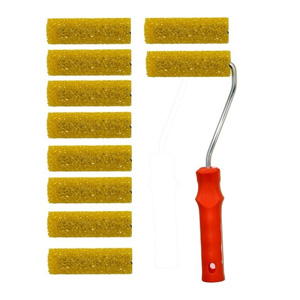
Got Yourself Tooled Up?TuffCab is easy to use and very versatile, but it helps to make sure you have the right tools on hand for the effect you want to achieve. If you are painting bare wood and want a textured effect, we recommend using our honeycomb rollers. The 4" roller is a convenient size for applying paint directly from the 5L tin without needing a roller tray. Apply the paint to the wood and roll in different directions, spreading it across the full panel and trying to achieve even coverage. Pay particular attention to exposed end grain, as this will normally require more thorough coating. Our 4" rollers come in packs of 10 for convenience. 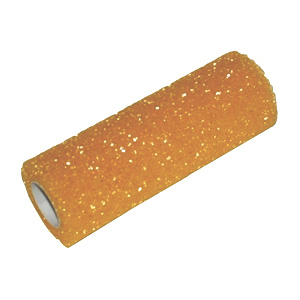
Getting an Even TextureAfter covering a panel, you may find it difficult to even out the textured effect, particularly on larger panels. A useful solution is to use a 9" roller to smooth the texture — but do not dip the 9" roller into the paint tin. Use the roller dry and gently roll it through the texture created with the 4" roller. A 9" roller can absorb a lot of paint. If you dip it into the tin, around 250–300 grams of paint may be needed just to load the roller fully, and you can end up with the same problem evening out the texture as you had with the smaller roller. The 9" roller is best used for smoothing only: you are superimposing texture over existing texture to create a more even effect. Don't panic if you cannot get the texture perfect on the first coat — it is virtually impossible to do. Resist the temptation to keep adding more paint and making the coat thicker and thicker, as it will simply become harder to even out. Move on to the next panel and let the first coat dry. Handy HintYou don't need to wash your roller between coats. Wrap it tightly in a plastic bag or cling film to minimise exposure to air, then unwrap it when you are ready for the next coat. A well-wrapped roller will normally stay usable for several days, saving cleanup time. Ready for the Second Coat?First check over the first coat. Any slight imperfections can be lightly sanded before applying the next coat. If the first coat feels rough and spiky, almost like sandpaper, it is easy to correct. Rub it down very lightly and continue with the second coat. Follow the same procedure for the second coat: use the 4" roller to apply the paint and the 9" roller to even out the texture. Gradually you will build texture over texture and achieve an even, random stippled effect. The second coat usually requires less paint because the first coat has sealed the wood and the surface is less porous. Don't Try to Paint Just One Thick CoatIt will go wrong. We've tried it. It is difficult, and you are likely to get uneven coverage, roller marks and a less durable surface. TuffCab first dries as the water content of the paint is absorbed into the wood and/or evaporates into the air. Once dry, it begins to cure and the acrylic resin in the paint hardens at the surface. The surface exposed to air hardens more quickly. It is therefore better to apply several thinner coats so each layer can dry and cure properly. Two or three thinner coats will normally give a more even texture and a more durable coating. Want Less Texture?No problem. Use a standard short-pile emulsion roller. Each coat will be thinner and much less textured; three or four coats can give a slight texture similar to a leather effect. A short-pile roller is also useful when touching up a previously painted cabinet that already has sufficient texture. | ||